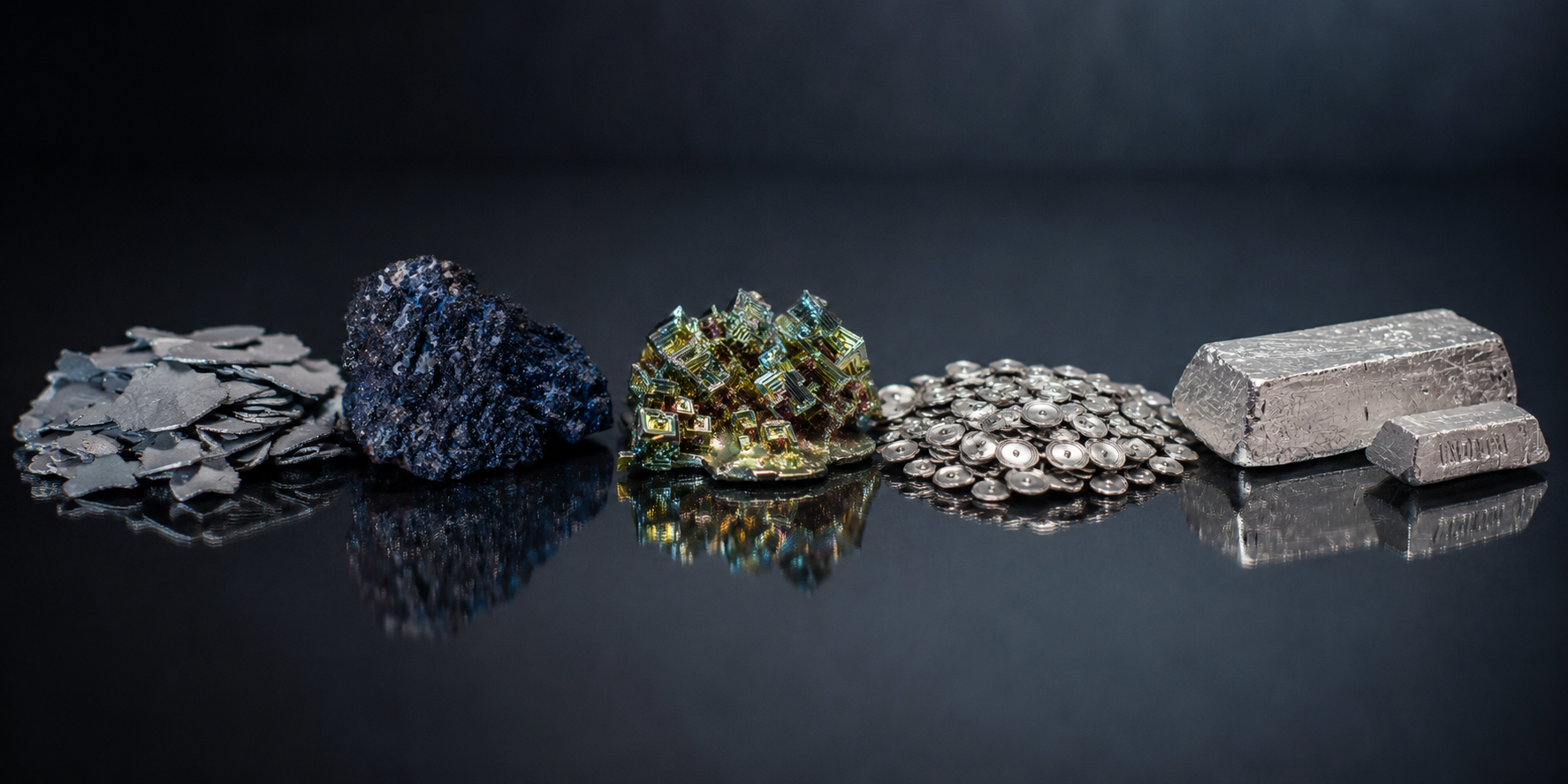
Strategic industrial metals are the invisible foundation of semiconductors, AI infrastructure, aerospace, electric mobility and defense technology. Physical. Rare. Outside the banking system.
While earlier technologies required only a few elements, modern high technologies require a wide range of specialized metals — often in tiny quantities, but without alternatives. A modern smartphone contains more than 60 different elements. A high-performance chip, satellite or aircraft engine is simply not manufacturable without strategic specialty metals.
Many of these metals are produced only as by-products of other mining processes — supply cannot be expanded at will, regardless of how strongly demand rises. Unlike gold, industrial metals are consumed in technology products and often do not fully return to the economic cycle. This creates structural supply bottlenecks that intensify with advancing technologization.
Gallium, germanium and indium are indispensable raw materials for modern chips and AI processors. Without them, no GPT, no autonomous driving, no AI infrastructure.
Rhenium in turbine blades, hafnium in high-temperature alloys, iridium in spark plugs. Precision that saves lives — and would be unthinkable without these metals.
High-performance batteries, electric motors and next-generation charging systems require specialty metals on a scale the world has not known before.
Radar systems, satellites, guided munitions, night vision systems — strategic metals have become security-relevant for Western defense capability.
The energy transition needs germanium for high-performance solar cells and indium for thin-film technologies. The fiber-optic networks of the future would not be feasible without these metals.
High-precision diagnostic and therapy devices, implants, surgical instruments — tantalum, iridium and ruthenium enable applications that save human lives.
What was long considered a technical niche topic has become a geopolitical flashpoint. China controls the production of key technology metals to an extent that has led Western industries into structural dependency.
In July 2023, China introduced export licenses for gallium and germanium — with immediate effect. In August 2023, exports of these metals fell almost to zero. The gallium price in Europe rose by 68 percent, germanium by more than 20 percent. In December 2024, China escalated further and imposed a complete export ban on these metals to the United States — a direct response to US semiconductor sanctions. In February 2025, export restrictions on tungsten followed.
The United States covers 100 percent of its gallium needs through imports. There is no domestic production. China controls 80 to 98 percent of global gallium and germanium production. Supply chain security, technological sovereignty, semiconductor production, AI infrastructure and the defense industry are directly affected. Strategic industrial metals are no longer merely raw materials — they are levers of geopolitical power.
China is increasingly turning access to critical raw materials into a geopolitical instrument: export licenses, export bans, prioritization of its own industry, possible punitive tariffs or administrative delays. What is still deliverable today may tomorrow be scarce, expensive or available only with permission.
A physical warehouse of strategic high-tech metals in Europe is therefore more than an investment. It is a real supply-security component. When supply chains slow down, European industrial companies may need material that is immediately available. For industry, a premium is often cheaper than a production stop. Sales are carried out only after consultation and with the consent of the respective owners/investors.
A private metal warehouse outside China means: if export permits are missing, supply chains are throttled or political tensions increase, physically available material in Europe is a strategic advantage — independent of port congestion, export quotas or decisions in Beijing.
When real scarcity emerges, it is not the theoretical exchange price that matters, but available goods in industrial quality. In such phases, industrial companies are more likely to pay a premium than to shut down production lines. This is precisely where the value of physically held metals can be realized.
The metal in the Liechtenstein warehouse is the property of the investors — and at the same time real substance needed by industry. Through the trading partner, material can, if required, flow directly to the processing industry. Any disposal takes place only with the consent of the respective investor.
Each of these metals is indispensable in specific high-technology applications — often without any alternative. Their global markets are extremely small compared with classic commodities. Even small changes in demand can have a significant impact on availability and price.
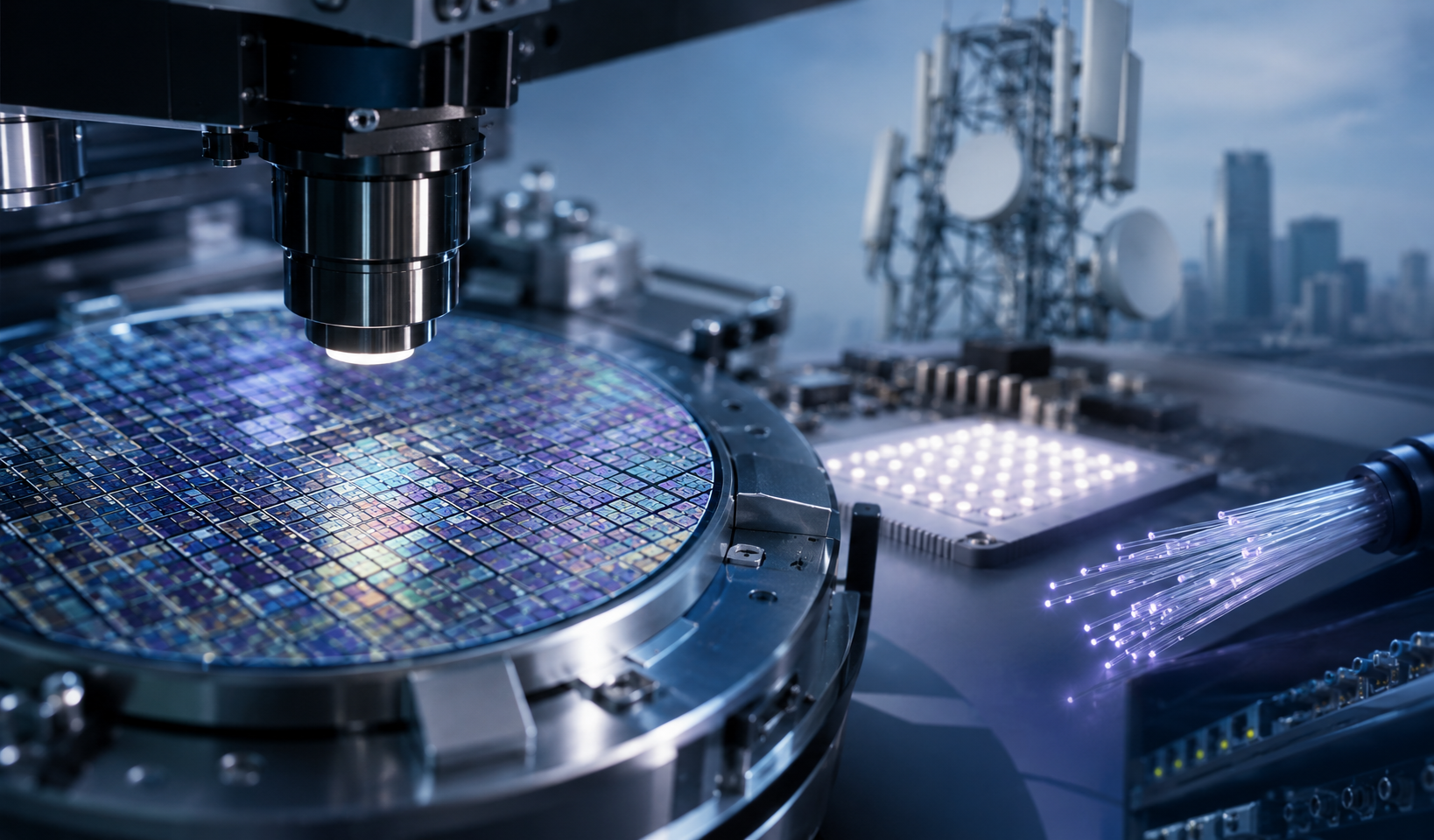
Gallium is the foundation of gallium nitride and gallium arsenide semiconductors — crucial for 5G base stations, high-frequency technology, radar, power electronics, LEDs, lasers and specialty solar cells. China dominates primary production; the metal mainly arises as a by-product of aluminum production and cannot be ramped up at will.

Indium tin oxide is the transparent conductive layer on almost every modern touchscreen, smartphone display and flat screen. It is also used in thin-film solar cells, specialty solders and semiconductor applications. Indium is produced almost exclusively as a by-product of zinc production — supply therefore does not simply follow demand.
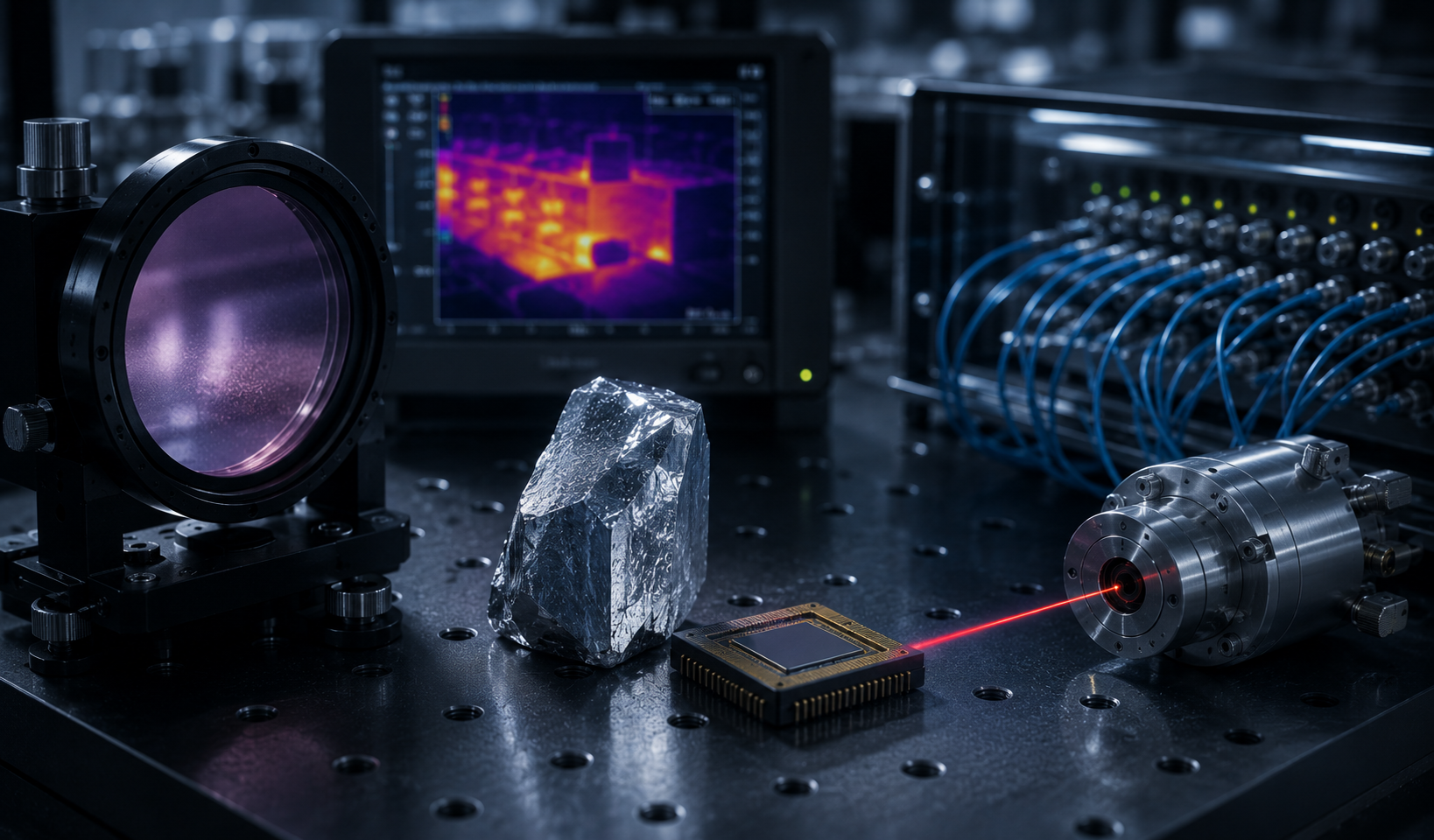
Germanium is a key metal for fiber-optic networks, infrared optics, thermal imaging systems, night vision technology and high-performance solar cells for satellites. It is produced mainly as a by-product of zinc and coal processing. China controls a large part of production and is already using export permits as a geopolitical instrument.
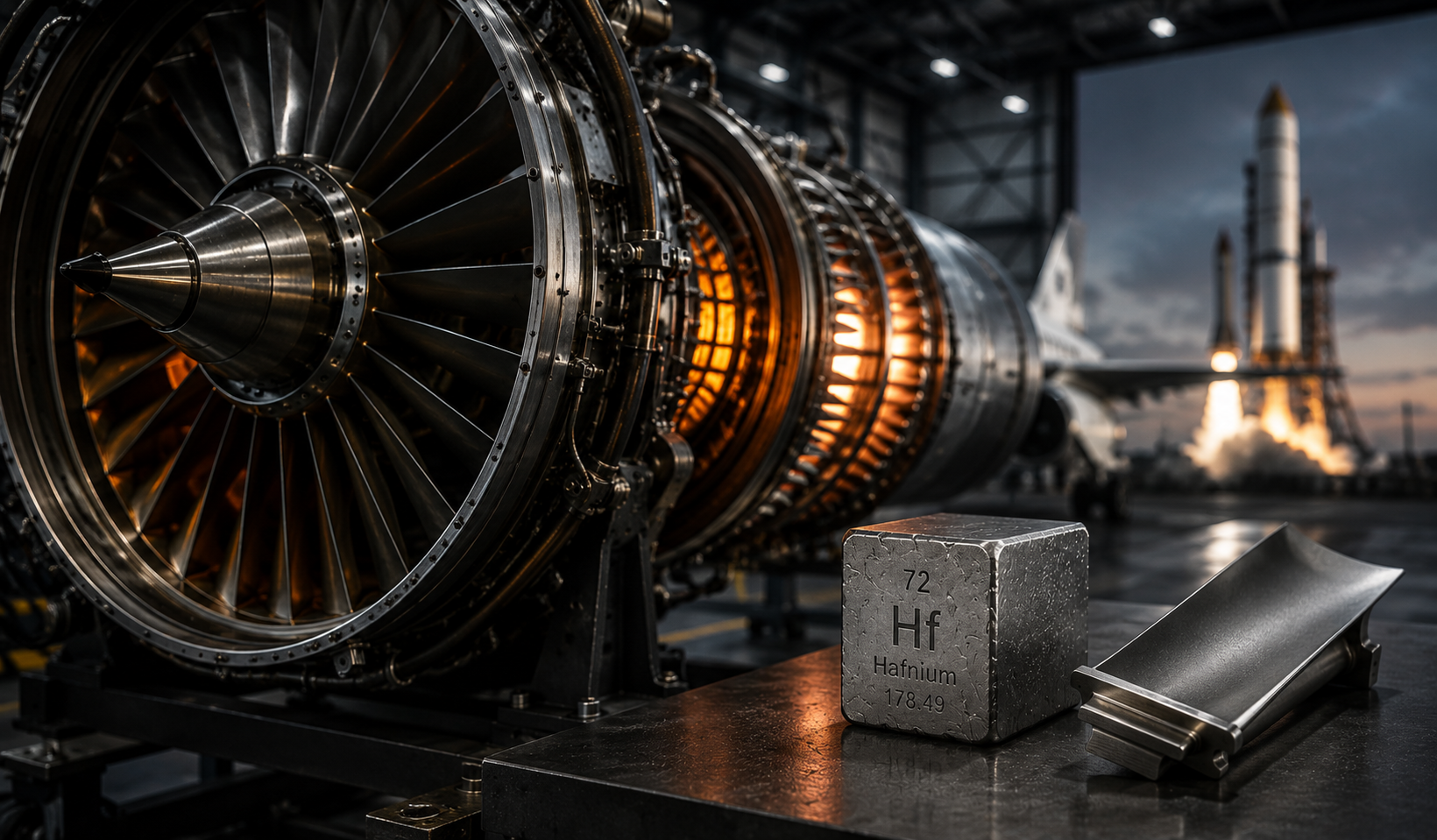
Hafnium is indispensable in modern microprocessors, high-temperature ceramics, specialty alloys and coatings. In aerospace and defense, it is valued for its temperature and corrosion resistance. Hafnium is produced practically only as a by-product of zirconium refining — a tiny market with major strategic importance.
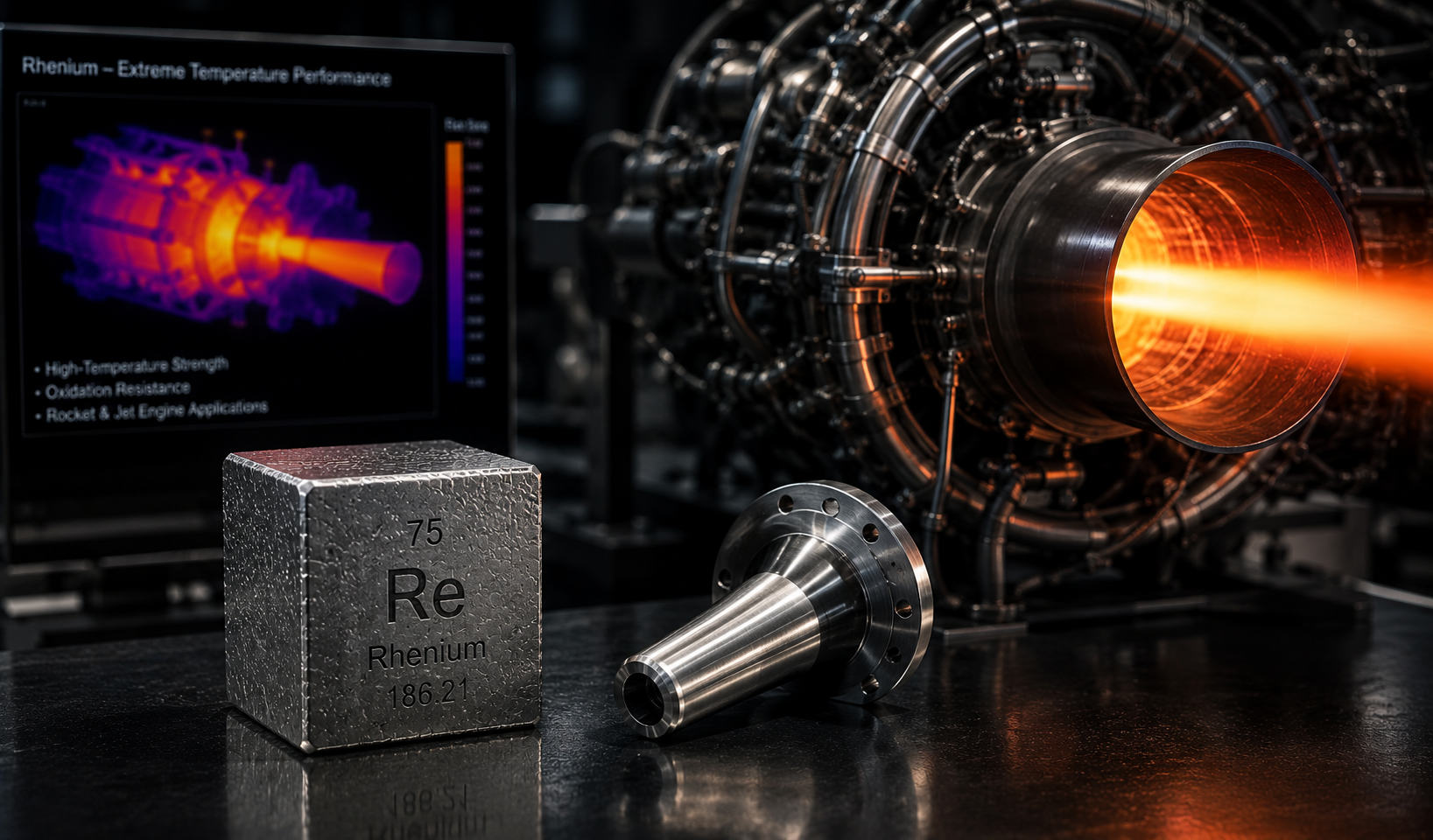
Rhenium is among the rarest industrially used metals. In nickel-based superalloys for single-crystal turbine blades in modern jet engines, it increases temperature resistance and service life. It is produced mainly as a by-product of molybdenum and copper production; a large share of demand comes from aerospace.
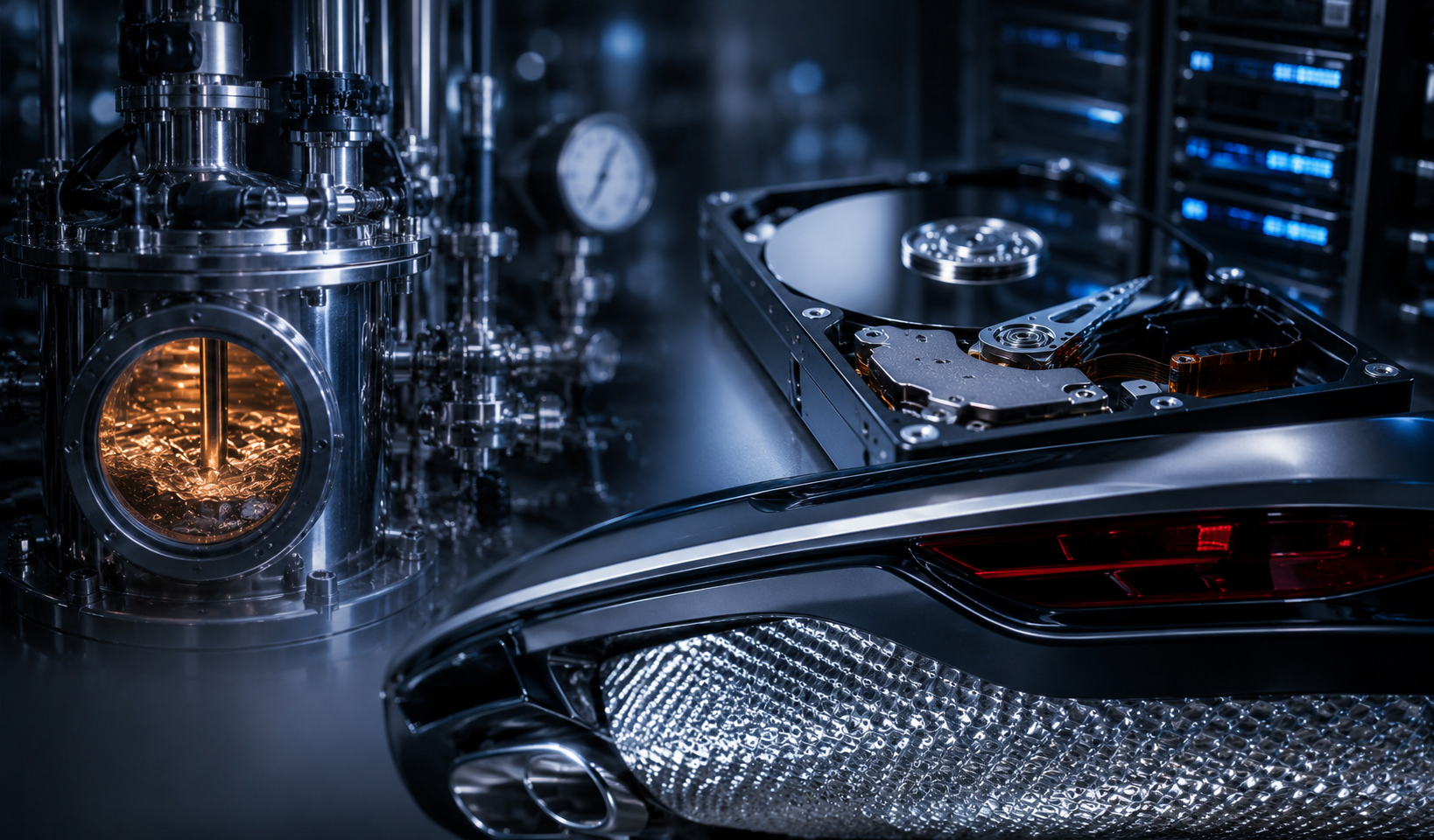
Ruthenium is used in hard drives and data storage, electrical contacts, resistors, coatings, chemical catalysis and electrochemical applications. It improves hardness, corrosion resistance and conductivity. The market is extremely small; ruthenium is produced almost only as a by-product of platinum and nickel.
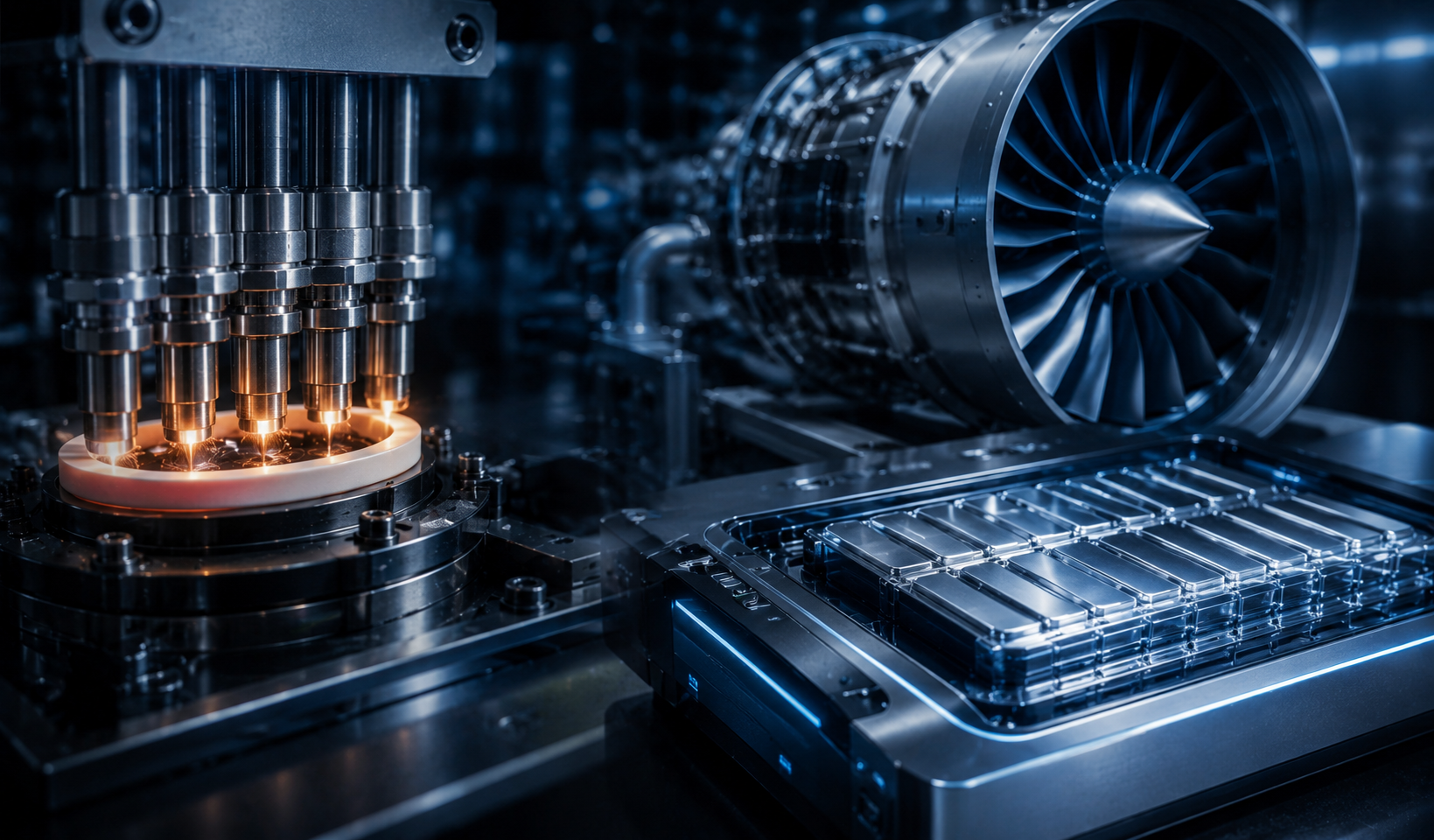
Iridium is one of the scarcest industrially used metals. It is used in high-temperature crucibles, spark plugs, electrodes, specialty alloys, aerospace, precision industry and PEM electrolysis for green hydrogen. Particularly critical: iridium arises only as a rare by-product of platinum mining and can hardly be scaled in the short term.
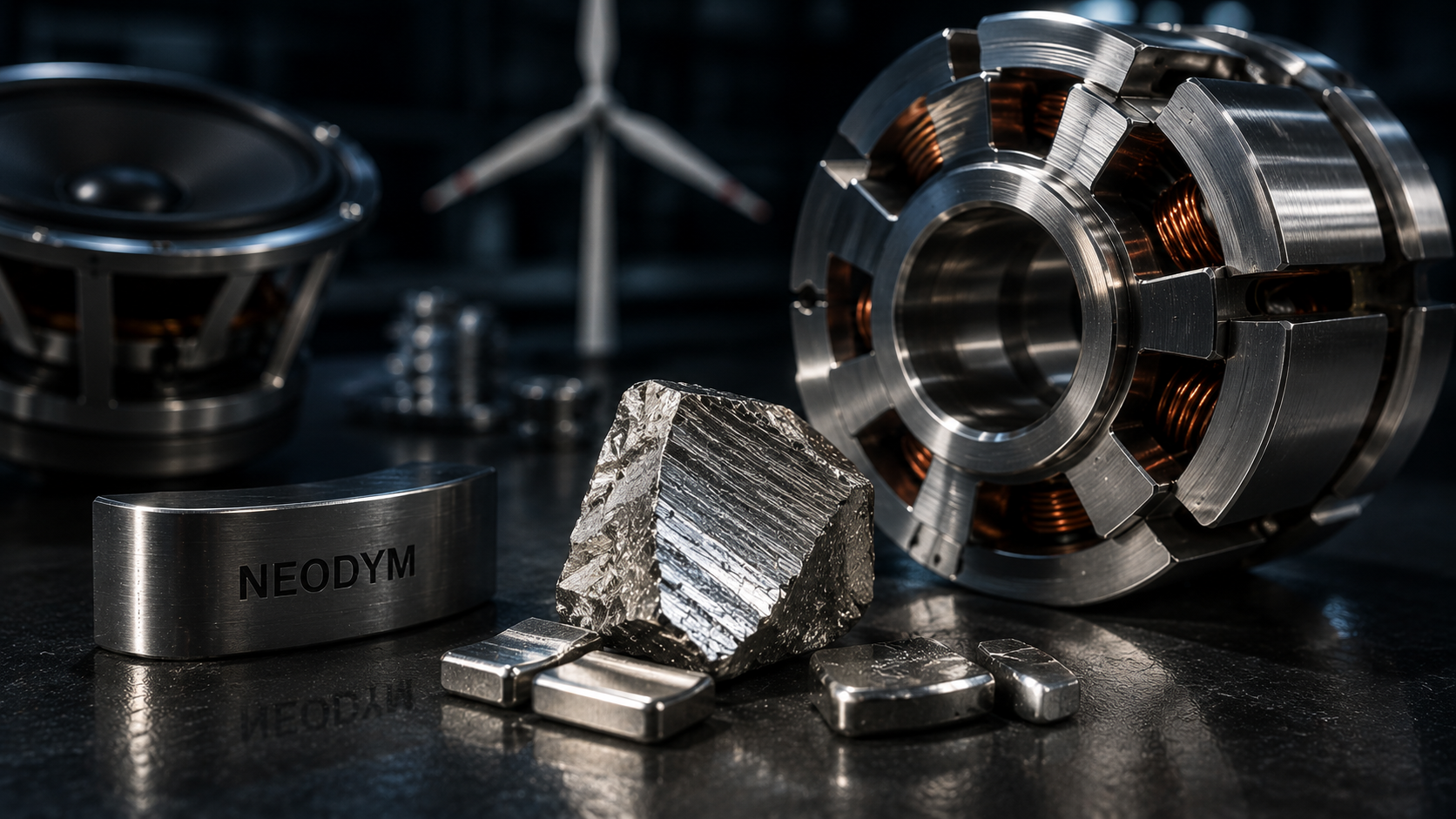
Neodymium is the most important raw material for next-generation permanent magnets — indispensable for electric motors in hybrid and electric vehicles, wind turbines, robotics, hard disk drives and loudspeakers. Without neodymium, the energy transition at today’s scale is not possible. China dominates mining, separation and processing of rare earths.
For strategic technology metals, the decisive factor is not only the absolute quantity available, but the combination of by-product character, geopolitical concentration and industrial indispensability. Many of these markets are so small that additional demand from AI, hydrogen, defense, aviation or the energy transition can trigger significant price and availability movements.
A pure by-product of aluminum refining. Export licenses since 2023 show how quickly availability can be politically controlled.
An extremely small by-product of platinum mining. PEM electrolysis for hydrogen can structurally overstrain the market.
The market is tiny. Demand from chips, aviation, rocket/defense technology and high-temperature applications meets rigid supply.
High-performance magnets are the bottleneck for wind power, electric motors, robotics and automation. The supply chain remains strongly shaped by China.
| Metal | Mining / primary production today | Consumption today | Demand until 2030/2040 | Bottleneck logic |
|---|---|---|---|---|
| Gallium | approx. 760 t/year global production; China share in primary production approx. 98%. | Semiconductors, GaN/GaAs, 5G, radar, LEDs, power electronics. | 2030e in critical applications potentially around 4–6x higher demand. | By-product + China control + export licenses. |
| Indium | Mainly by-product of zinc production; supply can only be directly controlled to a limited extent. | ITO layers for displays/touchscreens, thin-film PV, specialty solders. | Stable to rising through displays, sensors, photovoltaics and specialty electronics. | Zinc by-product; recycling is important, but not sufficient for a technology surge. |
| Germanium | Small market; by-product of zinc and coal processing; China very significant. | Fiber optics, infrared optics, night vision, satellite solar cells. | Rising through fiber-optic expansion, defense, aerospace and thermal imaging technology. | China dependence + export controls + highly security-relevant applications. |
| Hafnium | Practically no own hafnium mines; extraction almost only from zirconium refining. | Microprocessors, high-temperature alloys, aviation, defense, nuclear technology. | 2030e in technology scenarios possible 5–7x demand overhang. | Tiny by-product market: supply does not automatically grow with demand. |
| Rhenium | Very small annual production; by-product of molybdenum/copper. | Jet turbines, superalloys, aerospace, catalysis. | Dependent on aircraft construction, engine generations and defense spending. | Aviation quality cannot be substituted at will. |
| Ruthenium | Very small PGM market; by-product of platinum/nickel production. | Hard drives, contacts, resistors, coatings, catalysis. | Potentially rising through data storage, electronics, electrochemistry and hydrogen technologies. | PGM by-product; small, illiquid market with delayed supply response. |
| Iridium | approx. 7–8 t/year global production; almost only by-product of platinum mining. | Electrodes, high-temperature crucibles, spark plugs, specialty alloys, PEM electrolysis. | 2040e depending on hydrogen expansion possible demand up to approx. 34 t/year. | Extremely small market, hardly scalable, technologically difficult to substitute. |
| Neodymium oxide | Rare-earth chain; China dominates processing and magnet production with over 70%. | Permanent magnets for electric motors, wind power, robotics, loudspeakers, hard drives. | 2030e possible 3–5x demand overhang, driven by wind power, e-mobility and automation. | Magnet demand grows faster than Western supply chains are built. |
Source basis: USGS Mineral Commodity Summaries, Fraunhofer ISI “Raw Materials Needs for Future Technologies”, EU Critical Raw Materials Act / EU raw materials strategy, BGR/DERA studies on hydrogen raw materials and current specialist analyses on iridium and PEM electrolysis. For by-product metals, production and demand figures are often published only as estimates or market sizes; reliable orders of magnitude are therefore deliberately used instead of false precision.
Rare earths such as neodymium oxide are chemically more sensitive than classic technology metals. If stored improperly or too long without turnover, material can lose quality — it oxidizes, clumps or loses specification conformity. The result: industry no longer accepts it or accepts it only with significant discounts. In plain language: incorrect storage can massively endanger value.
This is exactly where many providers fail when they include rare earths in real-asset programs. They buy material, store it statically — and when selling discover that the quality no longer meets industrial requirements. Anyone investing in rare earths must therefore check whether the provider can truly prove active industrial trade, warehouse rotation and industrial acceptability.
PIB’s trading partner regularly supplies rare earths and technology metals to industrial customers. This means: warehouse material can be rotated — fresh material comes in, processed material goes out. Investors therefore hold not just a label, but material of industrial quality. This rotation is only possible because active industrial trading — not a pure investment division — is the core business.
The biggest problem in the market for strategic industrial metals is not acquisition — it is selling. Many providers fail exactly here. Settlement periods of 12 to 24 months are no exception. Massive discounts are the rule when there is no direct industrial access.
The reason: anyone acting primarily as a real-asset provider without their own industrial customer base has to sell through detours — with corresponding friction losses. That is the decisive difference.
Acquiring strategic industrial metals is comparatively easy. The real problem — which many investors only experience when selling — is liquidity. The market for technology metals is not an exchange market. There are no public trading venues, no daily prices, no anonymous buyer at the push of a button.
Many providers in this segment have built their business model primarily as an investment concept — without their own deep access to industrial buyers. When an investor wants to sell, the direct route to the market is missing. The result: settlement periods of 12 to 24 months are no exception, but common practice. Or the investor accepts massive price discounts because the provider cannot act as buyer and depends on intermediaries.
PIB’s trading partner follows a fundamentally different model. For more than 25 years, this company has supplied the processing industry daily with technology metals, rare earths and precious metals — as one of Europe’s leading raw material suppliers, with customers on five continents and direct supplier relationships with producers worldwide. The portfolio includes more than 40 metal raw materials in various qualities and delivery forms.
The decisive difference: industrial trade is the core of the business — not an investment division. This means that real industrial buyers for exactly these metals are present every day. When an investor wants to sell, the metal does not flow into a secondary market, but directly into the company’s own industrial supply chain. This enables fast, fair buyback — without months of waiting, without structural discounts, at conditions reflecting actual market value.
The purchase and sale of the metals take place exclusively through this institutional industrial partner. Physical storage is separate — in Liechtenstein, outside the EU, within PIB’s exclusive custody framework.
Entry is possible from €50 per month in a savings plan or from a one-time investment of €5,000. The investor acquires real physical metals — no certificate, no ETF, no synthetic structure. Storage takes place in Liechtenstein — outside the EU, outside the banking system, in one of the world’s most politically stable and property-rights-secure countries.
No sales pressure. Real information. The managing director personally explains which metals and which access route fit your situation.
Request a meeting →